The Intriguing World of Monopoly and the Role of "Lucky Max"
Understanding Monopoly
Monopoly, in its broadest economic sense, refers to the dominance of a specific player within a market, where this entity has the power to control prices, influence market trends, and limit competition. This control can stem from the unique ownership of resources, technology, or the right to produce a product. Monopoly is often seen as a significant barrier to healthy competition, as it can lead to inefficiencies in the market and negatively impact consumer choice.
The Origins of Monopoly
The concept of monopoly is not new to human civilization. Historically, monarchs and governments have granted exclusive trade privileges, effectively creating monopolistic markets. While this was an effective economic strategy in times of limited resources and technology, the modern take on monopoly has evolved significantly.
Throughout history, numerous companies have been labeled as monopolies. In the United States, the early 20th century witnessed the rise of monopolistic giants through aggressive industrialization and consolidation, leading to legislative reforms aimed at curbing their power.
The Mechanics of the Board Game: Monopoly
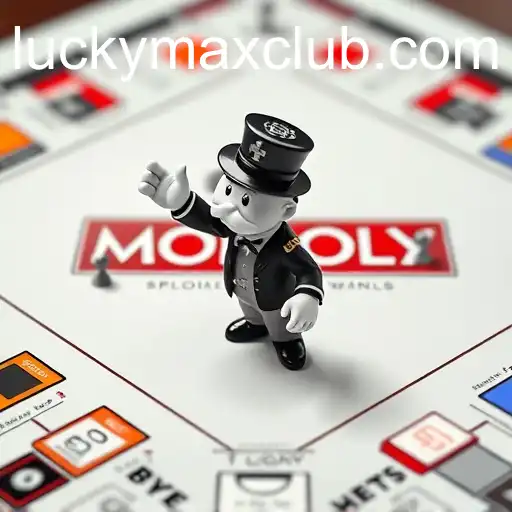
In a different context, the board game "Monopoly" has been a household staple for decades, teaching players about economics through a competitive and entertaining platform. The game allows participants to buy, sell, and trade properties to accumulate wealth, simulating the concept of a market monopoly.
One of the critical elements of the game is the reliance on both strategy and luck. Enter "Lucky Max"—a hypothetical character who represents the ideal player: one with unnaturally good fortune combined with strategic acumen.
The Role of "Lucky Max" in Monopoly
While "Lucky Max" might be an abstract concept, representing someone with extraordinary luck, their relevance cannot be understated in understanding how chance influences the outcome of economic activities. In the game, a roll of the dice can lead to unexpected windfalls or substantial losses, emphasizing the unpredictable nature of market dynamics that even the most strategic minds cannot control.
For instance, drawing a "Chance" card or landing on "Free Parking" can significantly alter a player's financial standing in the game, much like unexpected economic shifts in real life. "Lucky Max" signifies that variable in economic models that represents unforeseen positive outcomes and opportunities.
Monopoly in the Real World
The lessons from the Monopoly board game extend into real-world economics, where the balance of strategy and luck is evident in various market outcomes. Real-world monopolies, unlike their board game counterpart, often have substantial impacts on various stakeholders, including consumers, competitors, and the overall market landscape.
Governments worldwide have employed various regulations and antitrust laws to prevent monopoly abuses, recognizing that unchecked market power can lead to higher prices, reduced innovation, and poor product quality for consumers. Amid this regulatory environment, many businesses emphasize strategic planning and adaptability, attempting to emulate "Lucky Max"’s success scenario, hoping to thrive without overstepping legal boundaries.
Breaking Down Modern Monopolies
Contemporary digital age monopolies, particularly in tech, display unique characteristics not seen in a traditional monopoly. Companies like Google, Amazon, and Microsoft have been scrutinized, primarily for their market dominance and data control. These firms face the ongoing challenge of balancing growth with regulatory compliance.
With the rise of digital platforms, the size and scale of business operations have only magnified the potential for monopolistic structures. Here, "Lucky Max" can signify a startup or a firm leveraging innovation and market trends to shoot to prominence, navigating the complex and often treacherous waters of modern commerce.
Navigating Luck and Strategy in Markets
In dealing with monopolies, firms, and policymakers endeavor to emulate the balance of risk and reward that is so essential in both economics and in the context of the Monopoly board game. Successful players in the market often amalgamate luck and strategy to outperform their competitors and achieve sustained growth.
Understanding how probability and strategy interact helps regulators create more robust, adaptive market frameworks. Businesses, too, can leverage these insights to better adapt to changes, ensuring they remain competitive without stifling innovation or consumer choice.
The Future Outlook
As markets continue to evolve, and technological advancements reshape industries, the undercurrents of monopoly, strategy, and chance become ever more relevant. The concept of "Lucky Max" may very well serve as a whimsical guide for navigating these intricate dynamics, emphasizing that success often lies at the intersection of planning and seizing unforeseen opportunities.
While monopolies pose significant challenges, understanding their nature and adapting through strategic foresight can help businesses and economies thrive. As technology and globalization continue to alter the competitive landscape, visionary individuals and companies might continue to take inspiration from the lessons inherent in the rigged balance of the Monopoly board game.